
There comes a moment in the Jewish calendar when we enter the wilderness — by that I mean the book of B’midbar, also known as Numbers in the Torah. It’s filled with fascinating, juicy stories of rebellion and challenge. In many ways, it’s the adolescence of the Israelite people, as they wander for 40 years.
There is the real physical wilderness, which some of us visit from time to time.
And then there is the spiritual wilderness – the kind that visits us, sometimes longer than we would like.

Times of illness or transition or loss of any kind can put us into an existential desert where there is no map and no set path forward.
The only way out is through.
And the lessons we learn from spending time in unknown territory are profound and life-changing.
There is wisdom that can only be gleaned in the wilderness.
Come along on this journey with me as we dip into the Hebrew bible for some universal lessons.
A bit of context: the fourth book of the Hebrew bible is named B’midbar, meaning “In the Wilderness/Desert” in Hebrew. You may know the book by its Greek name, “Numbers.”
At the beginning of this book, the Israelites have just left 400 years of slavery, and set out to the promised land.
B’midbar chronicles their (our) 40 years of wandering.
There is no map.
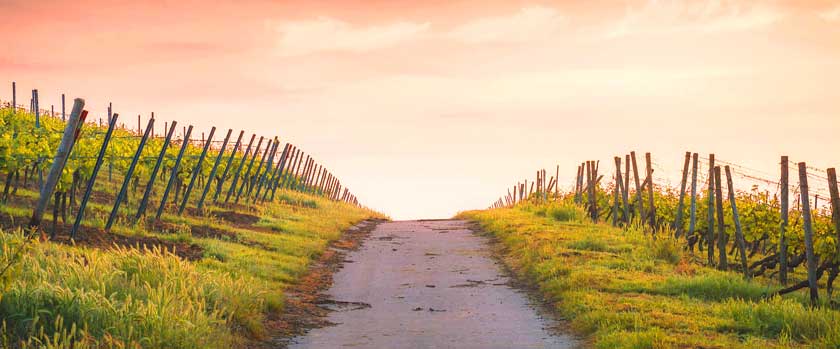
The book is filled with rebelliousness, restlessness and complaint — a collective “Are we there yet?”
A longing to return to what was known, because the unknown feels too hard.
From this rough, tender time, three lessons emerge.
Lesson #1: “I wish I had” is never the way forward. Freedom is accepting where we are right now.
Almost from the first step into the wilderness, the Israelites begin to complain bitterly. Worth remembering: they were enslaved for 400 years — and now they are free. And yet, because the present moment is uncomfortable, they idealize the past and long for the meals they once ate. Even bondage, at least, was known.
But here’s the thing: we can’t be anywhere else but where we are right now. Even when it’s uncomfortable. Learning to be present in the unknown — that is real freedom.
Lesson #2: Playing small is never the way forward. Telling ourselves the truth sets us free.
There’s a remarkable story in this book where the leaders of the group scout the promised land. They see a land flowing with milk and honey — and they also encounter people who are enormous, and become afraid.
When they return to report, this is what they say (paraphrasing): “Those people are so large that we look like grasshoppers in our own eyes, and so surely we must look like that to them.”
The key phrase here is “in our own eyes.” They tell themselves a story about who they are—small, incapable — not enough — and it is that story, not the giants themselves, that causes them to lose faith.
It is this lack of trust in themselves/ourselves and in the Divine that they/we end up wandering for 40 years.
Learning to notice the stories we tell ourselves — that is freedom.
Lesson #3 It’s the space in-between where we find our deepest freedom.
Moses is considered to be the wisest prophet in Jewish tradition. And yet, deep in the wilderness, he makes one significant mistake that costs him dearly.
The people are complaining and thirsty, and Moses’ patience has worn thin. God instructs him to speak to a rock and water will come forth. Instead, Moses strikes the rock and calls the people “rebels.”
Water does gush out. But for this act of anger, Moses is told that he will never set foot in the promised land. to live out his days never setting foot in the promised land. He dies in the desert, overlooking it from a distance.
The punishment seems so harsh.
But here’s the thing: the issue wasn’t Moses’ anger — of course he was frustrated!
The issue was that he didn’t pause. Didn’t breathe. Didn’t consider what his people needed from him in that moment.
As Viktor Frankl wrote, “Between stimulus and response there is a space. In that space is our power to choose our response. In our response lies our growth and our freedom.”
At this stage of the journey, the people needed a leader who was grounded and purposeful. It might have helped if Moses had talked it through with his brother Aaron or sister Miriam first, or any of the 70 elders, so he could show up as the leader the moment required.
We can all relate.

Each of us knows the feeling of being utterly undone. And most of us also know that acting from that place rarely serves us or the people we love.
Choosing our response to what happens to us may be the only freedom we really have.
My Favorite Book of the Torah
All three of these lessons are, at their heart, mindfulness practices: accepting the present moment, noticing the stories we tell ourselves, and finding the space between what happens and how we respond.
I’d love to know your thoughts. What lessons have you learned from the wilderness?
Interested in more inspiration and news about upcoming events? Subscribe to receive Rabbi Jill’s email newsletter.
For deeper discussion and to connect with others, join Path With Heart Community on Circle.