
What Judaism Says About Standing Up Right Now
Something is happening in this country that should make every person of conscience — and every Jewish social justice voice — unable to sit still.
The Supreme Court has gutted the Voting Rights Act — the hard-won, blood-soaked achievement of the Civil Rights Movement. Immigrant families, including children, are being detained in conditions that defy human dignity. The guardrails of democracy are being dismantled one by one, in plain sight, with breathtaking speed. The vulnerable are being made more vulnerable. The powerful are becoming more powerful.
And many of us — good, caring, spiritually-oriented people — find ourselves paralyzed. Overwhelmed. Wondering what one person can do. Retreating into the numbing scroll of a phone screen, or waiting for the right moment, or telling ourselves that our prayers are enough — hoping that if we breathe deeply enough, the world will feel less on fire.
Jewish social justice teaching has something urgent to say about this moment — and it holds two truths at once. The inner work of prayer and meditation is not the opposite of action; it is the root of it. We sit still in order to gather ourselves, to hear what we are called to do, to act from a place of depth rather than reactivity. The stillness is sacred. And then — the tradition is equally clear — we must rise and move.
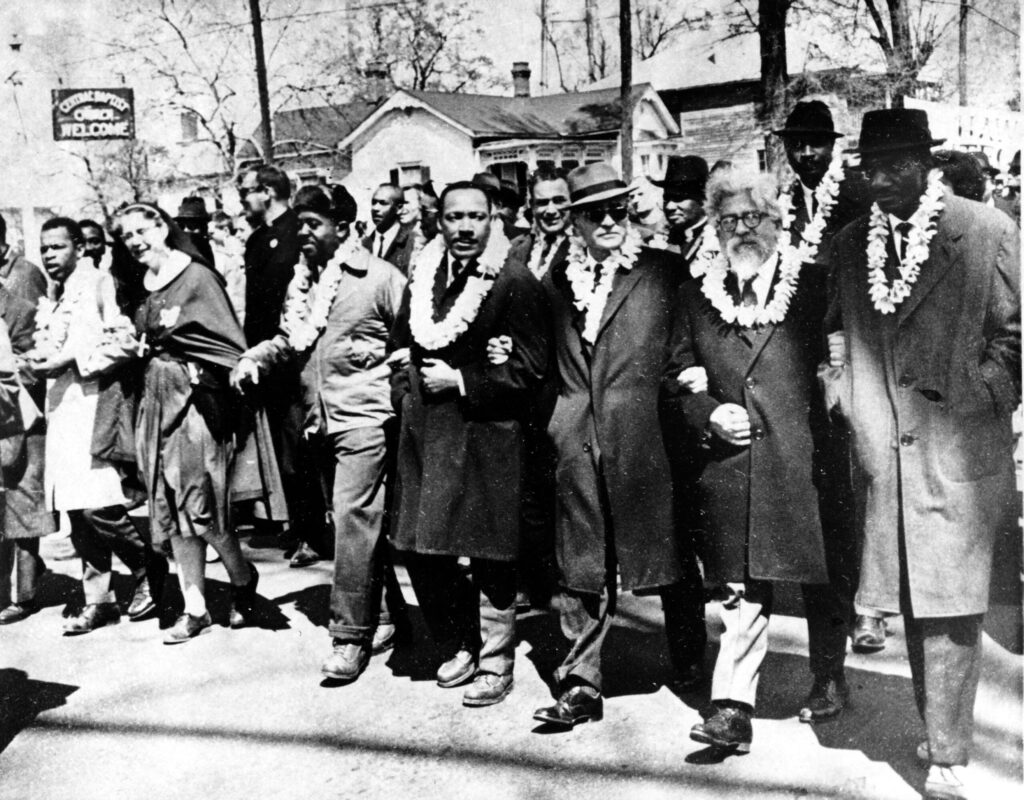
“I Felt My Legs Were Praying”
In March 1965, Abraham Joshua Heschel — the great Jewish theologian, mystic, and scholar — marched alongside Martin Luther King Jr. from Selma to Montgomery, Alabama. Afterward, he said something that has never stopped reverberating:
“For many of us the march from Selma to Montgomery was both protest and prayer. Legs are not lips and walking is not kneeling. And yet our legs uttered songs. Even without words, our march was worship. I felt my legs were praying.”
Read that again. He did not say walking was like prayer, or that it felt spiritual. He said his legs were praying. The body itself — moving in the direction of justice — was an act of sacred address to God.
This is not a metaphor. This is Jewish theology.
Heschel understood that tefillah — prayer — is not only what happens in synagogue, not only words rising from a siddur. Prayer is the orientation of the whole self toward what is holy and true. When that orientation moves us — literally, bodily, into the streets, the halls of power, the places where the vulnerable need a witness — that movement is the prayer.
The Prophets Have Always Known This
The ancient prophets of Israel said the same thing, with a fury that still shakes the page.
The prophet Amos, speaking to a community that maintained elaborate religious ritual while ignoring injustice all around them, said God had simply had enough:
“I loathe, I spurn your festivals, I am not appeased by your solemn assemblies… But let justice well up like water, righteousness like an unfailing stream.”
וְיִגַּל כַּמַּיִם מִשְׁפָּט וּצְדָקָה כְּנַחַל אֵיתָן
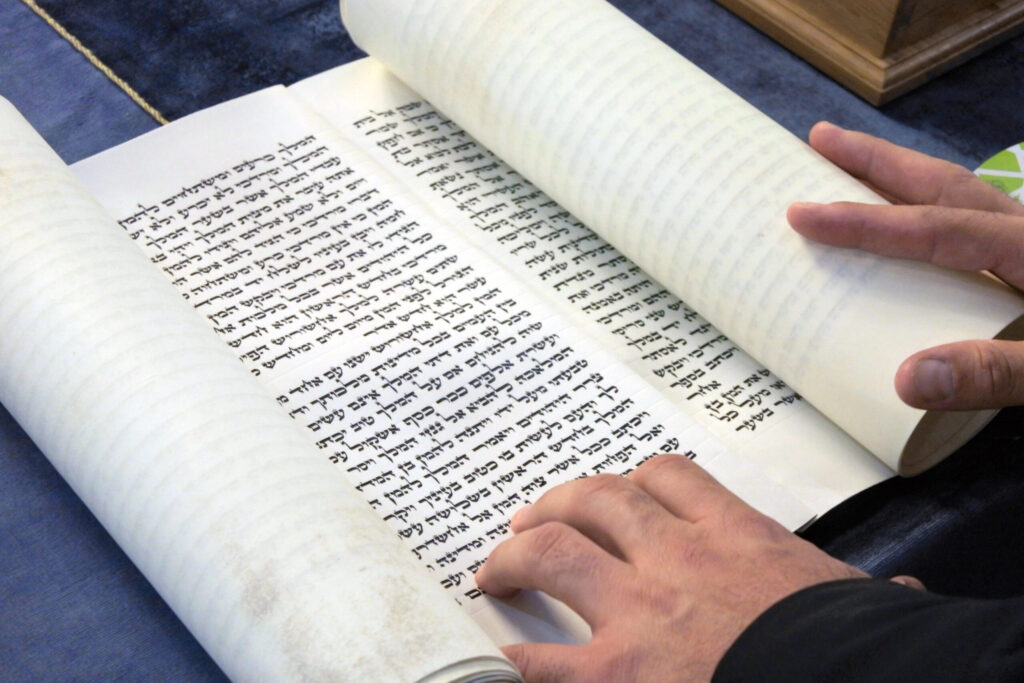
God does not want our beautiful prayers to be disconnected from how we treat the most vulnerable among us — the prayer and the action belong together. This is not a peripheral concern in Jewish life — it is the center.
Isaiah 58 — the very passage we read on Yom Kippur morning, on the holiest day of the year — makes it even more explicit. The people are fasting, praying, going through all the right motions, and God says: this is not the fast I want from you.
“No, this is the fast I desire: to unlock the fetters of wickedness, and untie the cords of the yoke, to let the oppressed go free; it is to share your bread with the hungry, and to take the wretched poor into your home.”
And then there is Micah, perhaps the most distilled statement in all of Jewish ethics:
“Only to do justice, and to love goodness, and to walk humbly with your God.”
הִגִּיד לְךָ אָדָם מַה־טּוֹב וּמַה־יְהוָה דּוֹרֵשׁ מִמְּךָ כִּי אִם־עֲשׂוֹת מִשְׁפָּט וְאַהֲבַת חֶסֶד וְהַצְנֵעַ לֶכֶת עִם־אֱלֹהֶיךָ
Notice that Micah does not say to be just — he says to do justice. It is active. It is bodily.
It requires us to move.
But What Can One Person Do?
Heschel was also clear about what happens when we don’t move. Near the end of his life, he wrote:
“Prayer is meaningless unless it is subversive, unless it seeks to overthrow and to ruin the pyramids of callousness, hatred, opportunism, falsehoods.”
Moral Grandeur and Spiritual Audacity: Essays, p. 263.
And historian Timothy Snyder, writing about the fragility of democracy, put it in terms that feel written for this exact moment:
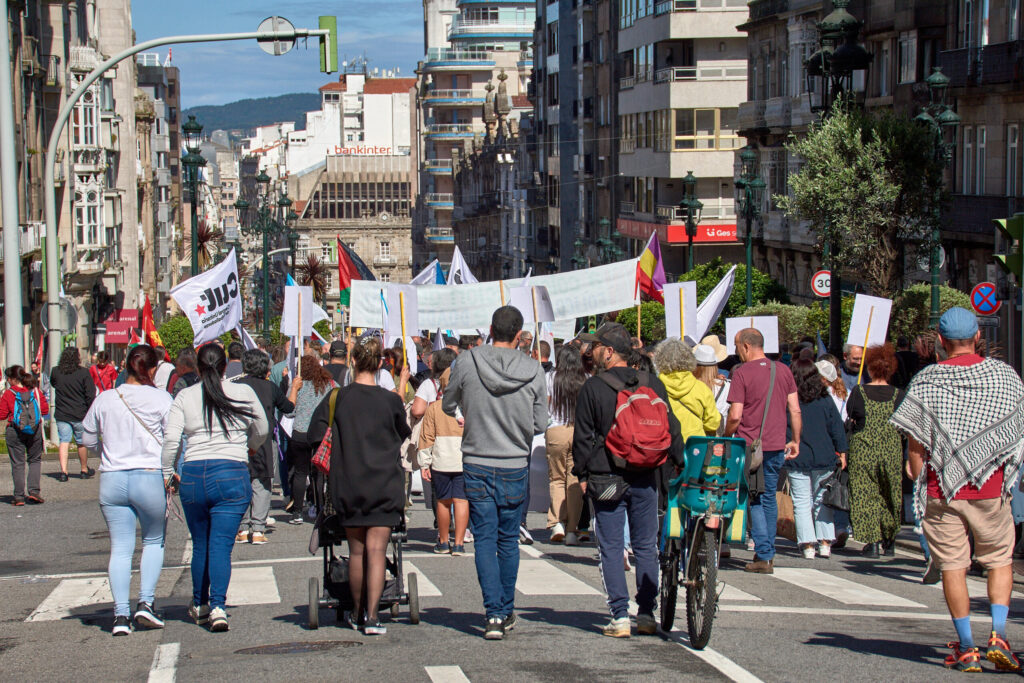
“Power wants your body softening in your chair and your emotions dissipating on the screen. Get outside. Put your body in unfamiliar places with unfamiliar people. Make new friends and march with them.”
From On Tyranny: Twenty Lessons from the Twentieth Century
Both of them understood: the body matters. Where you put your body matters. Presence is not passive.
This does not mean every act of resistance has to be a march. The poet Danusha Laméris reminds us that the ordinary, everyday gestures of human connection are themselves a form of holy resistance:
“I’ve been thinking about the way, when you walk down a crowded aisle, people pull in their legs to let you by… What if they are the true dwelling of the holy, these fleeting temples we make together when we say, “Here, have my seat,” “Go ahead—you first,” “I like your hat.””
– excerpt from the beautiful poem Small Kindnesses by Danusha Laméris
And Marge Piercy names what we are each called toward:
“The work of the world is common as mud… The pitcher cries for water to carry and a person for work that is real.”
-from To Be of Use by Marge Piercy
Where Is Your Selma?
In our Hineni community recently, we sat with these texts together. And the question we turned toward was this one: Where is your Selma?
Not a metaphor — but your actual Selma. The place where your prayer is calling your body to move. It might be a march. It might be a phone call to a representative. It might be showing up at a school board meeting, or donating to an immigration legal fund, or accompanying a neighbor who is afraid. It might be writing a letter. It might be having the conversation you’ve been avoiding.

And we don’t have to figure this out alone. In fact, Judaism insists we can’t. The prophets spoke to communities, not individuals. Heschel marched alongside King — two traditions, one march.
The work of justice has always been done in relationship, in coalition, in the company of others who are also answering the call. Part of the inner work of Hineni is asking not only Here I am — but Who is here with me? Who do I need to find?
Our Jewish social justice tradition is unambiguous: prayer without action is incomplete. But action grounded in prayer — in the deep inner work of Hineni, Here I Am — becomes something more than activism. It becomes a way of walking in the world that is, itself, sacred.
Heschel’s legs prayed. The prophets knew this. The poets feel it.
What is your body being called to do?
Rabbi Jill Zimmerman is the founder of Hineni: a Jewish mindfulness community offering monthly online gatherings, teachings, and resources for spiritual deepening and embodied living. Learn more at jewishmindful.org.

Interested in more inspiration and news about upcoming events? Subscribe to receive Rabbi Jill’s email newsletter.
For deeper discussion and to connect with others, join Path With Heart Community on Circle.